Hydraulic Hose Repair Service: When to Repair vs. Replace (2026 Guide)
Knowing when to repair a hydraulic hose versus replace it entirely can save equipment operators from unexpected downtime, fluid loss, and safety hazards. This guide covers the key warning signs, decision-making factors, and Nebraska-specific conditions that affect hose life. Whether you run a combine near Kearney, NE, or operate heavy construction equipment along the Platte River corridor, a timely hydraulic hose repair service can mean the difference between a short fix and a costly breakdown.
Visual Warning Signs Your Hose May Need Attention
Your eyes are your first diagnostic tool. Look for these signs during routine inspections:
▸ Cracking or crazing along the outer cover, which often signals UV or ozone degradation common during Nebraska's hot summer months.
▸ Bubbling or blistering on the hose surface, which may indicate internal liner failure.
▸ Abrasion wear that has exposed the wire reinforcement braid beneath the outer cover.
▸ Kinked sections where the hose has been bent too tightly, especially around loader arms and implement cylinders on row-crop tractors.
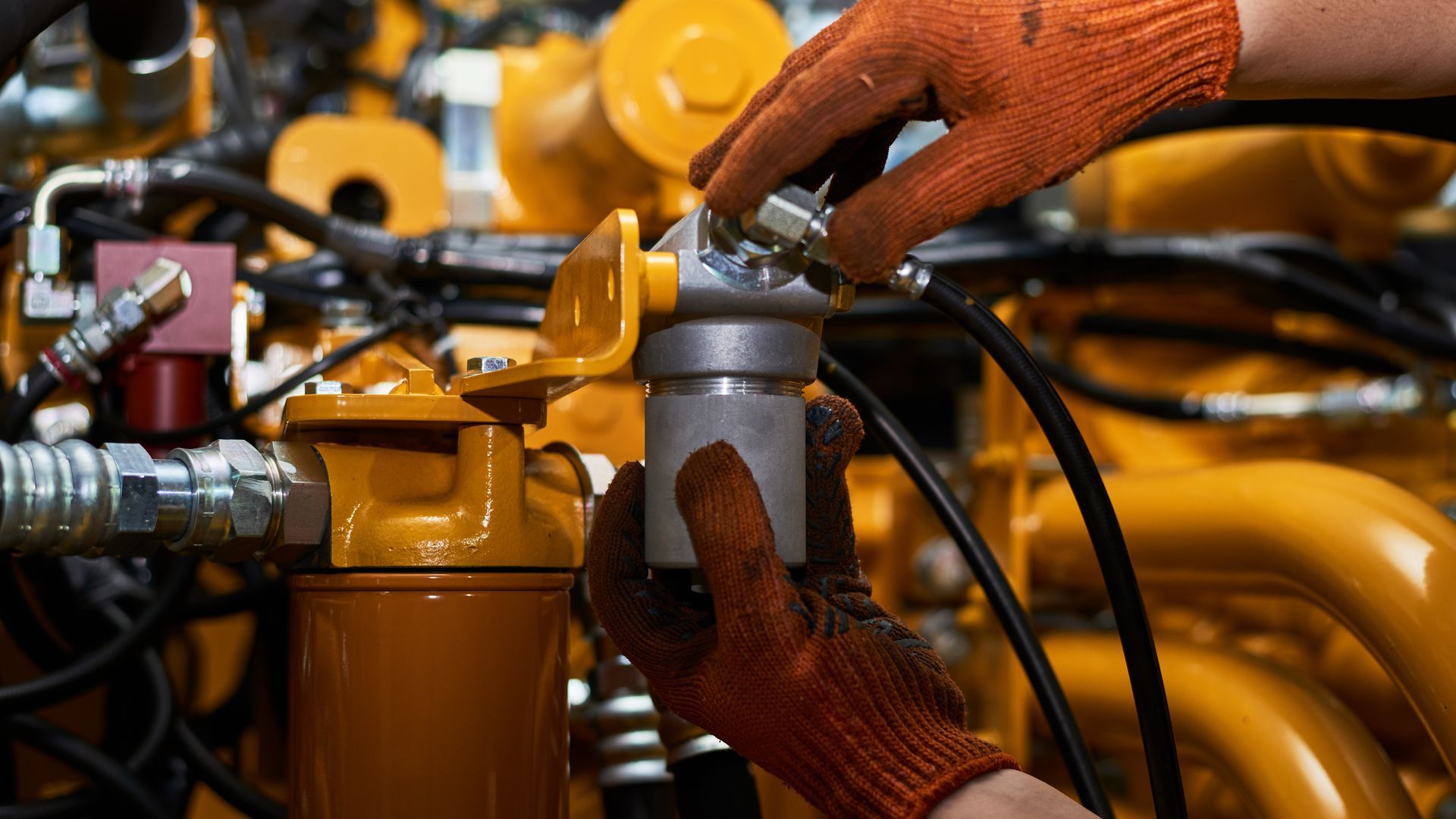
▸ Fitting corrosion or swelling near the crimp, which may signal the coupling is separating from the hose body.
▸ Oil staining along the hose length, even without visible dripping, which can point to weeping through a compromised wall.
Any of these conditions warrants stopping work and having the hose assessed by a qualified hydraulic hose repair service technician before continuing operation.
Performance Symptoms That Suggest a Hose Problem
Hose trouble often shows up as equipment behavior changes before a visible failure occurs. Watch for slow or weak cylinder movement, inconsistent hydraulic pressure, or controls that feel spongy and unresponsive.
A sudden drop in implement speed on a planter or grain cart during spring or harvest season near Kearney, NE, may not be a pump issue. It could be a partially collapsed hose restricting flow internally. A hose can look fine on the outside while the inner tube has swelled or deteriorated. Unusual heat near a hose section or a burning oil smell is also a red flag that calls for immediate inspection, not a temporary fix and a return to work.
When a Repair May Be Appropriate
A targeted repair can work in limited situations. Repair is often appropriate when damage is confined to the end fitting and the hose body itself is structurally sound. If a crimp fitting has loosened or corroded without affecting the hose tube or braid, a technician may be able to recut the hose end and install a new fitting.
Temporary repair couplings can get equipment moving again during harvest, but they are short-term measures and should be followed by a proper replacement at the earliest opportunity. A reputable hydraulic hose repair service in Kearney, NE, can assess whether a targeted fix is safe for your specific operating pressure and hose rating.
When Full Replacement Is the Right Call
Full replacement is typically the better choice in these scenarios:
▸ The outer cover shows cracking along most of its length, not just one spot.
▸ The hose is approaching or past its manufacturer's recommended service life, typically five to seven years depending on application and conditions.
▸ The hose has suffered a burst or pinhole leak under pressure.
▸ Wire braid exposure runs longer than a few inches.
▸ The hose was involved in a high-heat event, such as proximity to an exhaust manifold during heavy tillage work.
▸ The inner tube has collapsed or swelled, confirmed by restricted flow or a soft spot along the hose wall.
Nebraska's freeze-thaw cycles accelerate rubber degradation. Hoses that sat unused through winter on row-crop or feedlot equipment may develop micro-cracks that only become apparent under operating pressure. Spring startup is an ideal time to inspect every hose before the first pass of the season.
Factors That Affect Hydraulic Hose Lifespan
Operating pressure cycles, bending radius, temperature extremes, UV exposure, and contact with agricultural chemicals all shorten hose life. In central Nebraska, field equipment used through harvest works under high-cycle, high-pressure conditions for extended hours. Hoses that might last several seasons on lighter-duty equipment can show wear more quickly on combines, grain carts, or round balers running through September and October.
Routing also matters. Hoses that chafe against metal edges or run too close to exhaust components will fail early regardless of age. A professional hydraulic hose repair service can identify routing problems during inspection and correct them before they cause premature failure.
How Do I Know if My Hydraulic Hose Needs to Be Replaced?
You likely need replacement rather than repair if the hose shows cracking along most of its length, has a visible burst point, exposes the wire braid, or has exceeded its service life. A technician can confirm by pressure-testing the assembly and inspecting the inner tube condition.
Is It Safe to Keep Using Equipment With a Leaking Hose?
No. A leaking hydraulic hose poses a serious safety risk. High-pressure hydraulic fluid can penetrate skin, cause fires near hot surfaces, and lead to sudden loss of equipment control. Shut down the equipment and have the hose assessed immediately.
How Often Should Hydraulic Hoses Be Inspected?
Most manufacturers recommend visual inspection at every service interval and a thorough check at least once per season. In high-cycle applications common to Nebraska harvest operations, inspecting hoses at the start and end of each major work season can catch problems early and prevent in-field failures.
Get the Right Assessment for Your Equipment
The right call between repair and replacement depends on hose condition, application pressure, equipment make, and your operational timeline. Guessing wrong can cost far more than a new hose.
Central States Hydraulic Services, serving Kearney, NE, and surrounding communities across central Nebraska, is a trusted hydraulic hose repair service offering professional hydraulic hose inspection, custom hose building, and complete system service for agricultural and construction equipment of all makes. For added convenience, we offer pick-up and drop-off service at Kelly Supply in Kearney. Visit our hydraulic hose repair page to learn more, or contact us to request an evaluation. Call 402-438-5900 to speak with a technician and get your equipment back to work.